
 1675
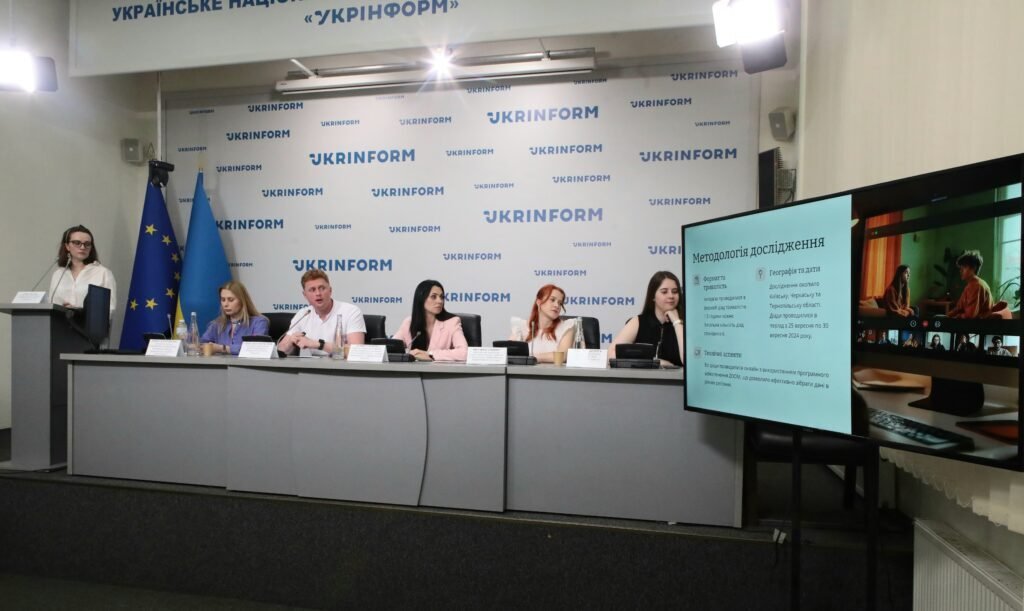
1675On June 2, 2025, the initiative “Parents for Tobacco and Nicotine-Free Ukraine” in partnership with the Advocacy Center “Life,” held a press conference titled “Nicotine Epidemic Among Schoolchildren: What Children Say – Research Presentation” at the Ukrinform news agency. During the event, the results of a qualitative study among adolescents aged 15–17 were released. This study was conducted in September 2024 and involved 6 online dyadic interviews.
The survey results confirm statistical data regarding the tobacco and nicotine use epidemic among children and provide a deeper understanding of adolescents’ motivation, behavioral patterns, and attitudes toward novel tobacco and nicotine products.
Infographic: “Tobacco and Nicotine Consumption Practices Among Minors”
Tobacco and Nicotine Consumption Practices
Adolescents surveyed reported daily observation of e-cigarette use among peers, regular use of heated tobacco products (HTPs), and less frequent use of cigarettes, hookahs, and nicotine pouches. The adolescents surveyed identified several key reasons behind their use of different nicotine and tobacco products. For e-cigarettes, the primary appeals were their convenience, the wide variety of available flavors, and the absence of a strong, lingering odor. When it came to heated tobacco products (HTPs), participants were drawn to their attractive image, diverse flavors, and the developing sense of dependence. Cigarettes were often chosen due to their easy accessibility, normalized behavioral patterns, and the addictive nature of nicotine. Nicotine pouches were favored for their ease and discretion of use, as well as their flavor options. Finally, hookah use was often linked to the welcoming environments created in food establishments.
According to the WHO’s Global Youth Tobacco Survey (GYTS), the prevalence of tobacco use among children aged 13-15 has increased by 18% since 2017, rising from 14.9% to 17.6%. Among them, 12% smoke cigarettes and 7% use heated tobacco products (HTPs); 20% use e-cigarettes, and 3% use nicotine pouches.
Nicotine Pouch Advertising: “A Gray Road, a Gray House, and Only One Bright Thing”
Most study participants recalled seeing advertisements for heated tobacco devices, e-cigarettes, and nicotine pouches within the last few months. They most frequently remembered seeing these ads in retail outlets, on the internet, and across social media platforms. The most prominent exposure was to advertisements for IQOS and VELO.

“We are witnessing a concerning rise in tobacco and nicotine product use among children. This is an extremely alarming sign. The tobacco industry must not have access to our children. To halt the spread of this addiction, we need stronger legislation concerning new products and better enforcement of existing laws. We must ban advertising, flavored heated tobacco products, and introduce graphic warnings on all tobacco products – all of which are provisions of Draft Law №12091. It is also time to approve a complete ban on e-cigarettes and nicotine pouches, as these are often the starting point for children who quickly develop dependence”, stated Olha Masna, leader of the “Parents for Tobacco and Nicotine-Free Ukraine” initiative.
“You show a fake Diia and can buy it almost anywhere”
Despite the prohibition of sales to individuals under 18, tobacco and nicotine products remain accessible to children. They acquire these products in several ways: by purchasing them independently at lenient retail locations, by displaying fake Diia apps, by ordering online through Telegram channels or social media, and by arranging delivery via Nova Poshta.

“Children are the future of Ukraine. It is our duty as a society and a country to create safe conditions for their development. Tobacco and nicotine use is a threat from which we are capable of protecting children. Right now, we must do everything possible to ensure that tobacco and nicotine products are not sold to minors, in accordance with the law – and I will address the Government with a corresponding appeal. I also urge support for Draft Law №12091, which aims to restrict the tools used to draw children and youth into nicotine addiction”, emphasized Tetiana Skrypka, Member of Parliament of Ukraine, Head of the Subcommittee on Family and Children Affairs of the Committee on Humanitarian and Information Policy.
Awareness of Consequences
Some children mistakenly believe that novel tobacco and nicotine products are less harmful than traditional cigarettes. At the same time, many children linked a product’s harm level to its frequency of use. For example, many believe that e-cigarettes and nicotine pouches are among the most harmful because children use them frequently and unimpeded, and their pleasant taste quickly leads to addiction. The myth of lower harm is most deeply rooted regarding heated tobacco products, which is not surprising given that tobacco companies aggressively misled consumers, a fact acknowledged by the Antimonopoly Committee of Ukraine.
The survey revealed that children lack sufficient information about the dangerous consequences of using tobacco and nicotine products. This finding is corroborated by GYTS data, which shows that only 44% of adolescents aged 13-15 reported receiving education at school about the harms of tobacco use. However, one source of information about the consequences is the combined medical warnings on cigarette packs. The interviewed adolescents noted that the images depicting the consequences are frightening and unpleasant, and they pointed out their absence on packs of HTPs and e-cigarettes.
Protection from Tobacco Smoke and Smoking Cessation
Despite the legal prohibition, some respondents regularly observe their peers using tobacco and nicotine products on the premises of their educational institutions. The survey also shows that adolescents become dependent at an early age, and some of them want to quit nicotine. However, most respondents are unaware of organizations and online resources where they can receive professional help to quit using tobacco and nicotine products.

“To protect children from nicotine addiction, a holistic approach is needed—from appropriate legislation to systemic work in schools. The survey shows that children lack knowledge about the risks, consequences, and options for quitting this addiction. We are working to ensure that students receive reliable information, understand the harm of novel products, and have access to free professional help for quitting tobacco and nicotine use through the ‘Stopsmoking.org.ua’ service”, stated Olena Zaporozhska, Head of the Non-Communicable Diseases Prevention Department at the Public Health Center of the Ministry of Health of Ukraine.
For contact information: Olha Masna, Leader of the “Parents for Tobacco and Nicotine-Free Ukraine” initiative, 073 089 65 70, olha.masna@center-life.org