
 2696
2696Advocacy Center “Life”, in collaboration with the Kyiv International Institute of Sociology, presented the results of a survey regarding the use of and attitudes toward tobacco and nicotine products among the adult population of Ukraine. The survey was conducted in November-December 2025 as part of a regular “Omnibus” using the computer-assisted telephone interviews (CATI) method. The sample is representative of the current population of Ukraine.
According to the survey results, 29% of Ukrainians are current users of tobacco and nicotine products: 24% use them daily, while another 5% are occasional users. This means that one in four adult Ukrainians is nicotine-dependent. For comparison, in February 2025 (the previous round of the survey), 27% of respondents were daily users.
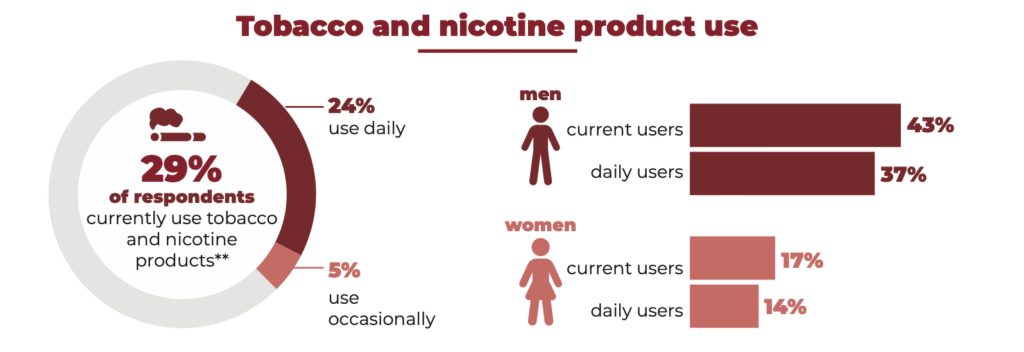
37% of men are daily users of tobacco and nicotine products (compared to 41% in February 2025), while among the female population, the share is 14% (compared to 16% in February 2025). The highest consumption rates persist among the youngest age cohort — 18-29 years old: 45% are users, of whom 33% use these products daily and another 12% occasionally.
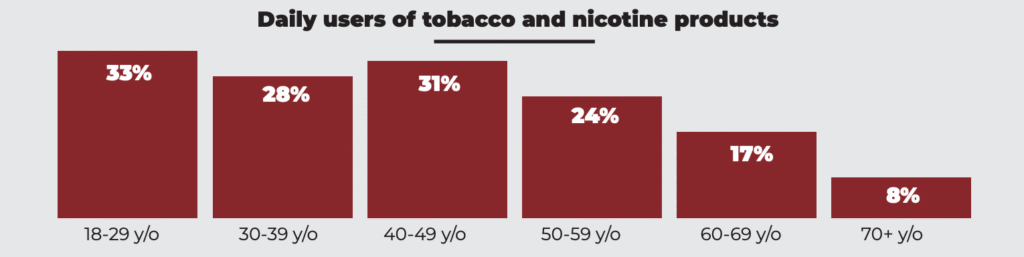
The survey results suggest that the prevalence of new tobacco and nicotine product use is not driven by cigarette smokers switching over, but rather by the recruitment of new consumers, primarily among young people aged 18-29.
Among the 18-29 age group, the level of daily use of these new tobacco and nicotine products is higher than the average for the overall adult population.
| Product Category | Youth (18-29 years old) | Total Adult Population (18+) |
| HTPs (Heated Tobacco Products) | 9% | 3% |
| E-cigarettes | 20% | 5% |
| Nicotine Pouches (Velo, Lyft, Zyn) | 4% | 1% |
| Traditional Tobacco Products
(Cigarettes, cigarillos, pipes) |
18% | 19% |
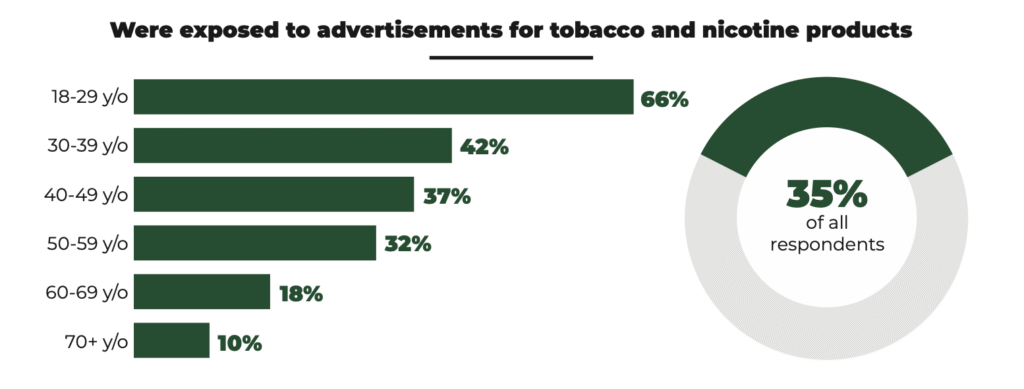
These data correlate with respondents’ exposure to advertising: it is the youth who are the primary target of the tobacco industry. Respondents aged 18-29 encountered the marketing of tobacco and nicotine products most frequently — 66%, compared to 35% among the general population.
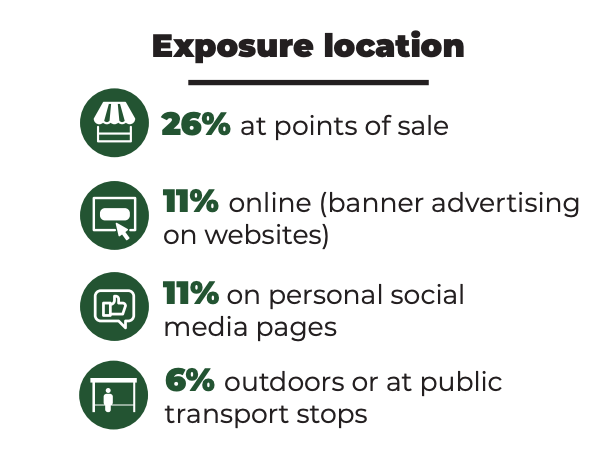
Points of sale remain the primary channel of marketing influence, cited by 26% of all respondents. Other significant channels include internet banner ads at 11%, and mentions on the personal pages of public figures (influencers) on social media at 11%.
The share of respondents who noticed advertisements for nicotine pouches (snus) has risen sharply — increasing by 51.5% compared to 2024. In 2025, this exposure reached 21% among all respondents and a staggering 48% among young people aged 18-29.
The rapid growth in exposure to nicotine pouch advertising and the subsequent rise in consumption require urgent government intervention.

“Year after year, we observe that young people are the most active consumers of both new tobacco and nicotine products and their advertising. Therefore, youth are the primary drivers of the spread of their consumption. Given this, protecting young people from nicotine initiation is a key condition for stopping the tobacco and nicotine epidemic,” noted Viktoriia Zakhozha, Deputy Director of the Kyiv International Institute of Sociology.
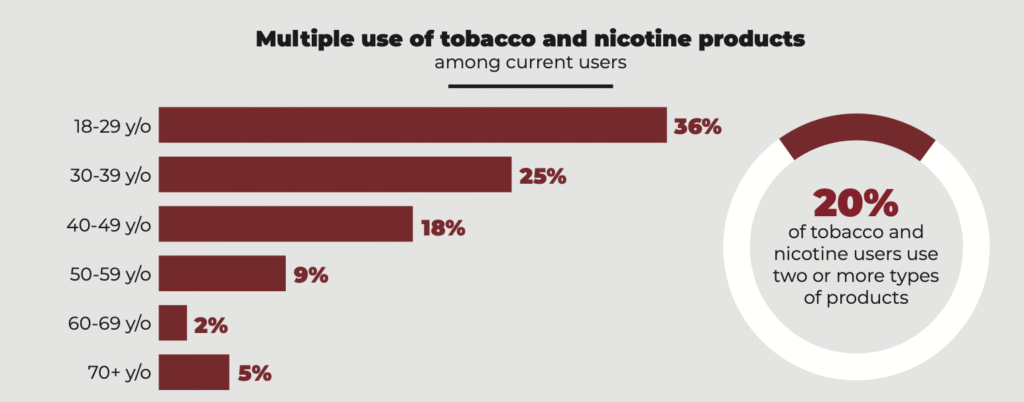
Multiple use of tobacco and nicotine products is a matter of particular concern: approximately 20% of users combine two or more products, and among the 18-29 age group, this figure reaches 36%. This can lead to the intake of uncontrolled doses of nicotine, intensifying addiction and increasing the risk of irreversible health damage.
Infographic: Tobacco and Nicotine Product Consumption: Prevalence and Attitudes of the Ukrainian Population
Support for strengthening anti-tobacco legislation has grown rapidly among Ukrainians
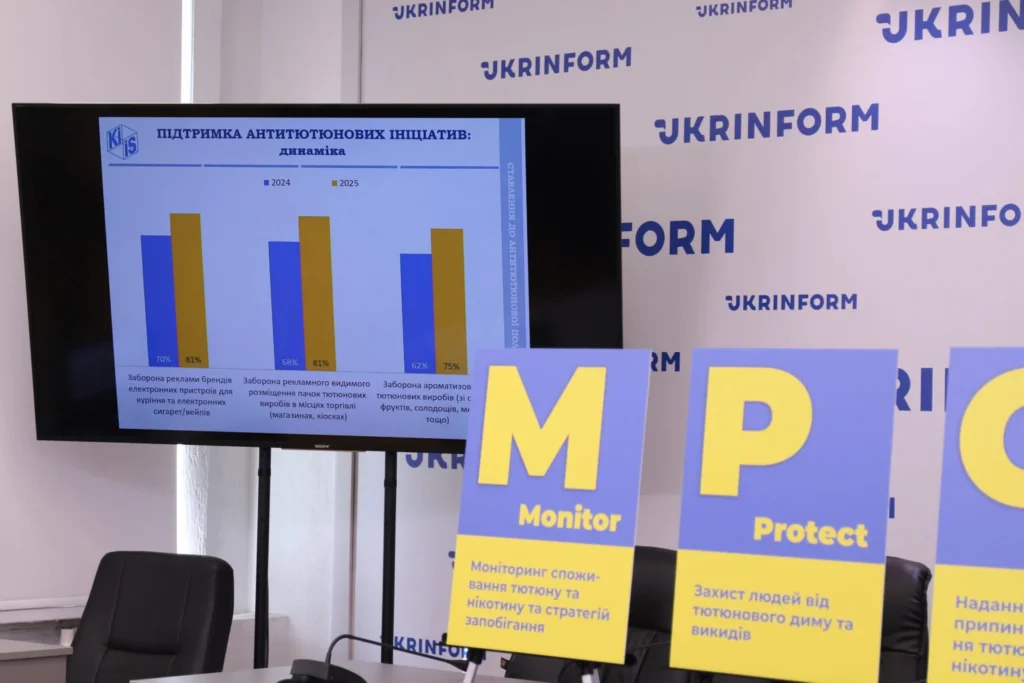
The survey results demonstrated a significant increase in support for stricter tobacco control measures, with over 70% of Ukrainians backing each of the proposed policies. This indicates a well-established and clearly expressed public demand for more robust government policy in the field of tobacco and nicotine control to protect public health.
According to the survey, respondents expressed their support for the following policies, which align with the WHO Framework Convention on Tobacco Control (FCTC) guidelines, Conference of the Parties (COP) decisions, and EU Directive 2014/40/EU:
- 81% support a ban on advertising for HTP devices brands and e-cigarettes;
- 81% support a ban on the visible display of tobacco and nicotine products at points of sale (shops, kiosks);
- 75% support a ban on flavored tobacco products (fruit, candy, menthol flavors, etc.);
- 75% support a ban on the production and sale of e-cigarettes and their e-liquids;
- 72% support increasing taxes on HTPs to the same level as traditional cigarettes;
- 70% support a ban on nicotine pouches (snus).

“Nicotine pouches are still being freely sold by the tobacco industry to children and, as the survey results confirm, are being aggressively advertised. The surge in public support for regulatory measures to protect children and youth from the harms of tobacco and nicotine – which has reached 70-80% – is a clear signal for the Verkhovna Rada of Ukraine and the Government to immediately adopt decisions in favor of public health,” emphasized Dmytro Kupyra, Program Director of Advocacy Center “Life”.
The Committee on National Health, Medical Care, and Medical Insurance has developed Draft Bill No. 14110-d, which aims to introduce regulations for nicotine pouches. The provisions of the bill are supported by the Ministry of Health of Ukraine and the World Health Organization (WHO), both of which emphasize that the best solution for protecting public health is a complete ban on nicotine pouches. The bill is currently awaiting consideration by the Verkhovna Rada of Ukraine.
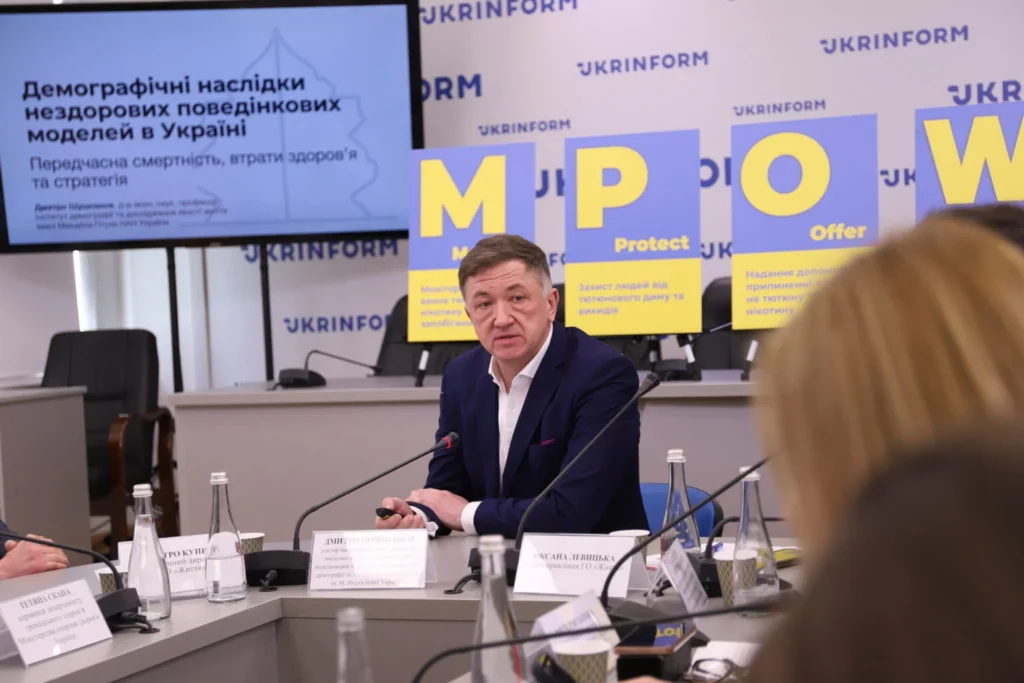
“Tobacco and nicotine consumption are among the critical factors directly impacting the population’s age structure and size — through premature mortality, increased morbidity, and reduced healthy life expectancy. Therefore, protecting the population from tobacco and nicotine should be viewed as a component of national security and demographic recovery,” emphasized Dmytro Shushpanov, Doctor of Economic Sciences, Professor, and Head of the Department of Demographic Modeling and Forecasting at the Mykhailo Ptukha Institute for Demography and Quality of Life Research of the National Academy of Sciences of Ukraine.
It is important to note that the survey data do not confirm the scale of illicit tobacco trade reported by the tobacco industry, which is primarily disseminated to oppose the implementation of effective anti-tobacco measures. This highlights the need for independent monitoring and transparent methodologies to assess the illicit trade of tobacco and nicotine products.
Approximately 100 000 people die prematurely in Ukraine every year from tobacco-related diseases.
Analytical Report: Tobacco and Nicotine Product Consumption: Experience and Attitudes, December 2025
Contact person:
Olha Masna, Media Coordinator
Phone: +380 73 089 65 70
Email: olha.masna@center-life.org