
 238
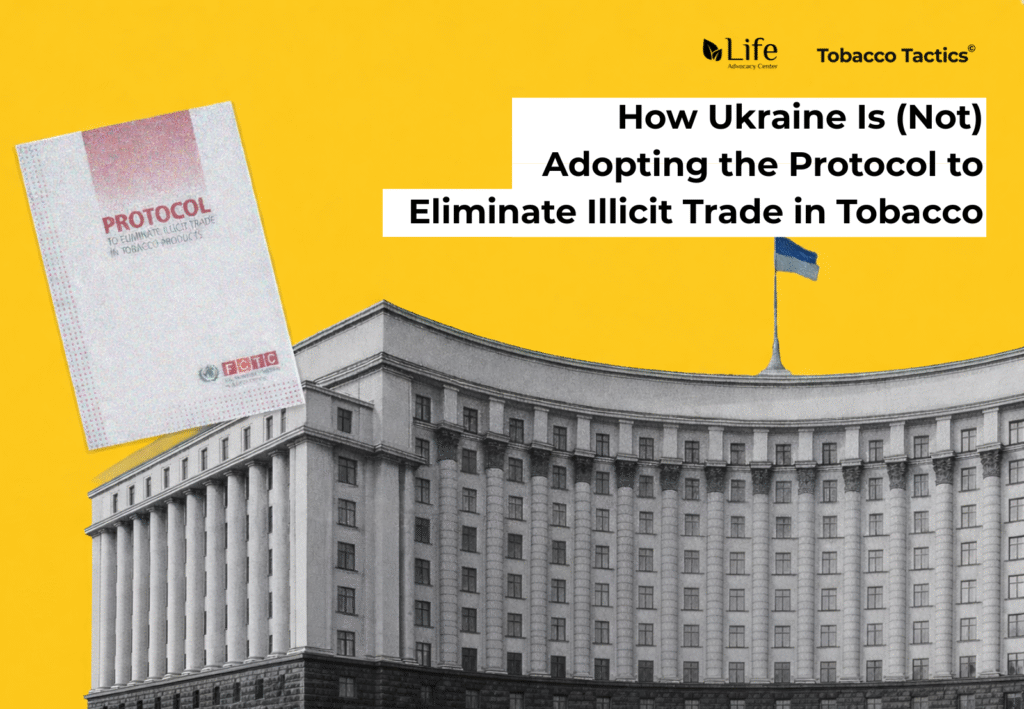
238Thirteen years have passed since the adoption of the WHO Protocol to Eliminate Illicit Trade in Tobacco Products, yet Ukraine remains outside this key international mechanism. Despite long-standing obligations under the WHO Framework Convention on Tobacco Control (WHO FCTC), its European integration course, and billions in budget losses caused by the shadow market, Ukraine’s ratification of the Protocol has been systematically blocked.
The WHO Framework Convention on Tobacco Control is the first binding international public health treaty adopted under the auspices of the World Health Organization. As part of the implementation of the WHO FCTC, the Protocol to Eliminate Illicit Trade in Tobacco Products was developed and adopted as the first supplementary international legal instrument to the Convention, aimed at coordinating state actions and establishing a system for the prevention and control of illicit trade in tobacco products.
The World Health Organization notes that illicit trade in tobacco products contributes to increased consumption. Illicit cigarettes are usually cheaper and more accessible, making them attractive to various population groups, particularly young people. As a result, the spread of illicit products undermines state efforts in tobacco control and in reducing tobacco use prevalence.
The tobacco industry itself is often cited as the largest source of illicit trade. According to various studies, the share of the tobacco industry in supplying illicit products varies across countries but can reach 60–70%.
At the same time, while publicly declaring its commitment to combating illicit tobacco trade, the tobacco industry consistently avoids supporting the Protocol as the key international instrument to counter illicit trade, instead promoting its own industry-friendly solutions.
For nearly ten years, Ukraine’s accession to the WHO Protocol to Eliminate Illicit Trade in Tobacco Products has been subject to systematic delays, despite repeated decisions by state authorities and strong support from civil society. The Ministry of Health of Ukraine has repeatedly prepared draft laws on accession to the Protocol and submitted them via the Ministry of Foreign Affairs to the President of Ukraine for subsequent introduction to the Verkhovna Rada. However, between 2017 and 2024, all such attempts ended with the documents being returned for revision, which likely indicates a lack of political will and the influence of the tobacco industry on decision-making processes.
At the same time, ratification of the Protocol is not a matter of political expediency but an international obligation of Ukraine under the WHO Framework Convention on Tobacco Control and the EU–Ukraine Association Agreement. The European Union is a Party to the Protocol, and the majority of EU Member States have already ratified or signed it.
In a publication on the updated Tobacco Tactics platform, we examine the reasons for the long-standing delay in Ukraine’s ratification of the WHO Protocol to Eliminate Illicit Trade in Tobacco Products, the role of the tobacco industry in this process, and the consequences of the absence of this international instrument for public health policy and economic security.
We recall that actions taken in the interests of the tobacco industry violate Article 4 of the Law of Ukraine “On Measures to Prevent and Reduce the Use of Tobacco Products and Their Harmful Impact on Public Health,” as well as Ukraine’s international obligations under the ratified WHO Framework Convention on Tobacco Control. Article 5.3 of the WHO FCTC states: “In setting and implementing their public health policies with respect to tobacco control, Parties shall act to protect these policies from commercial and other vested interests of the tobacco industry in accordance with national law.”
Tobacco Tactics is a project of the Advocacy Center “Life”, an information-focused thematic resource on the strategies and tactics used by the tobacco industry to influence public health policymaking in Ukraine, particularly in the field of tobacco control.