
 1496
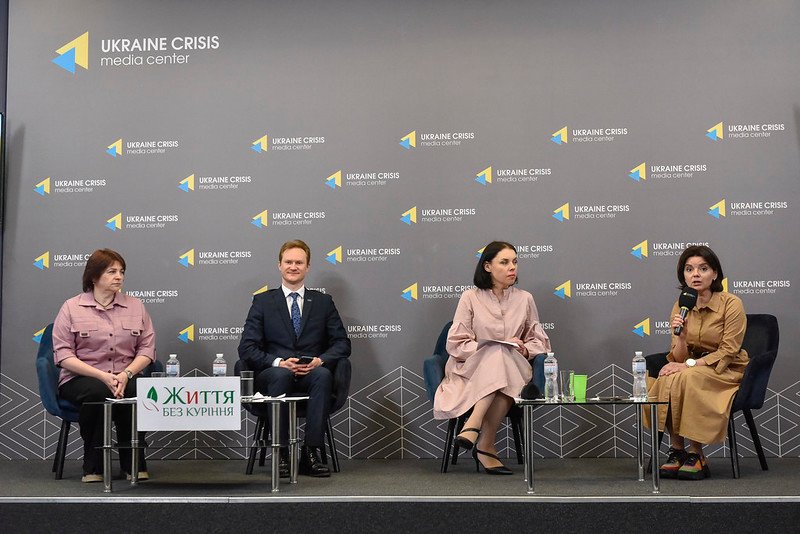
1496The NGO ‘Life’ in cooperation with the Ministry of Social Policy of Ukraine held Health Media Talks panel discussions between representatives of civil society, government officials and media representatives. The participants discussed the prevalence of tobacco and nicotine use as one of the factors behind the demographic crisis in Ukraine and the role of the media in overcoming it.
The Ministry of Social Policy of Ukraine has presented the Strategy of Demographic Development of Ukraine until 2040. The data shows that Ukraine is facing a demographic crisis caused by a combination of factors.
Today, the main reason for the rapid decline of Ukraine’s population is the full-scale war with Russia, which causes many losses and also intensifies the factors that were present before. These include forced emigration, low birth rates, and high premature mortality rates, especially among men, which are linked, in particular, to tobacco and nicotine use.
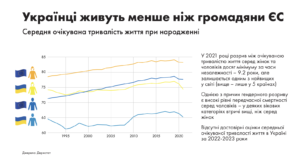
Statistics show that Ukrainians live less than citizens of the European Union. The most striking difference is among the male population: Ukrainian men live 10-13 years less than EU citizens, and this gap was observed even before Russia’s full-scale invasion of Ukraine.

‘There are several factors that influence why Ukrainians live less than EU citizens. This is a late reaction to dangerous diseases when it is no longer possible to cure them. Low self-preservation behaviour: ignoring the risks of injury at work, dangerous behaviour on the road that leads to road accidents, etc. And unhealthy lifestyles, including tobacco use. In response to these and other challenges, which have been significantly exacerbated by the war, we have developed the Demographic Development Strategy of Ukraine until 2040, which will reduce premature mortality, increase the birth rate, return migrants and build a country where people want to live,’ said Daria Marchak, First Deputy Minister of Social Policy of Ukraine.
In addition to the risk factors among men, there are threatening trends among women, namely a twofold increase in the prevalence of tobacco and nicotine use. While in 2017, 8% of Ukrainian women were daily users of tobacco and nicotine, today this number is 15%.
The aggressive promotion of flavoured tobacco products, heated tobacco products and e-cigarettes has been a key factor in the spread of the tobacco and nicotine epidemic, especially among young women. 28% of women aged 18-29 are daily consumers of tobacco and nicotine products, which clearly has a negative impact.
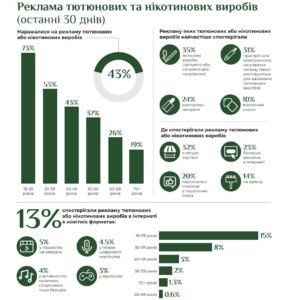
Inadequate regulation of newer smoking devices has contributed to their increased prevalence among women and young people. These data are complemented by statistics on the impact of advertising: 73% of Ukrainians aged 18-29 notice tobacco and nicotine advertising, mostly in retail outlets. In other words, the tobacco industry is hunting for Ukrainian youth.

‘There is no such thing as safe smoking. Every year, more than 130,000 Ukrainians die from tobacco-related diseases. Because of this, the tobacco industry is hunting for children and young people to attract 100,000 new smokers. In addition to people’s health, the Ukrainian economy loses about 3.2% of GDP every year due to the tobacco epidemic. In 2023, this amounted to about UAH 200 billion. To reduce the prevalence of tobacco and nicotine consumption, it is necessary to apply proven international practices approved by the WHO,’ said Dmytro Kupyra, Executive Director of NGO “Life”.
The media play an important role in the state’s timely response to demographic threats and in strengthening legislation. The media have the function of highlighting glaring social problems, exposing lies and manipulations of the tobacco industry, and disseminating information about the consequences of tobacco and nicotine consumption for the health of each individual citizen, as well as for social capital and the state as a whole. On the other hand, it is important that the media do not succumb to manipulation by the tobacco industry and do not cooperate with it, which is prohibited by Ukrainian law. The media should adhere to journalistic standards, which are one of the ways to protect themselves from promoting tobacco narratives.

‘Public discussions, publications, statistics, and public pressure force the authorities to do something. No one but us will take care of the health of our children, the future generation and the economic achievements of the state,’ said Yevhen Plinsky, journalist and host of 1+1 TV channel.
In order to overcome the demographic crisis and strengthen human capital, all branches of government need to be activated: the legislature to strengthen legislation and regulate new smoking products, the executive to effectively monitor and enforce the law, the judiciary to punish lawbreakers, and the ‘fourth estate’ – the media – to ensure openness and a reliable information base for decision-making.
For Ukraine, the most urgent issues today are: raising the excise tax rate on tobacco products to at least EUR 120, as the average rate in the EU is already around EUR 180 per 1000 packs; eliminating advertising and promotional displays of tobacco and nicotine products in retail outlets; and banning flavoured tobacco products. Implementation of such decisions should be part of the demographic strategy plan to protect the health of Ukrainians!
Such measures have already demonstrated their effectiveness globally, and in Ukraine in particular. Following the adoption of the 2012 anti-tobacco law, the prevalence of smoking in Ukraine has declined significantly. According to the Global Tobacco Survey, from 2010 to 2017, the prevalence of smoking among Ukrainian adults decreased by 20%, and among youth aged 13-15 by 23% compared to 2011 and by 43% compared to 2005.
Contact person: Olha Masna, media coordinator at NGO Life, 073 089 65 70, olha.masna@center-life.org