
 170
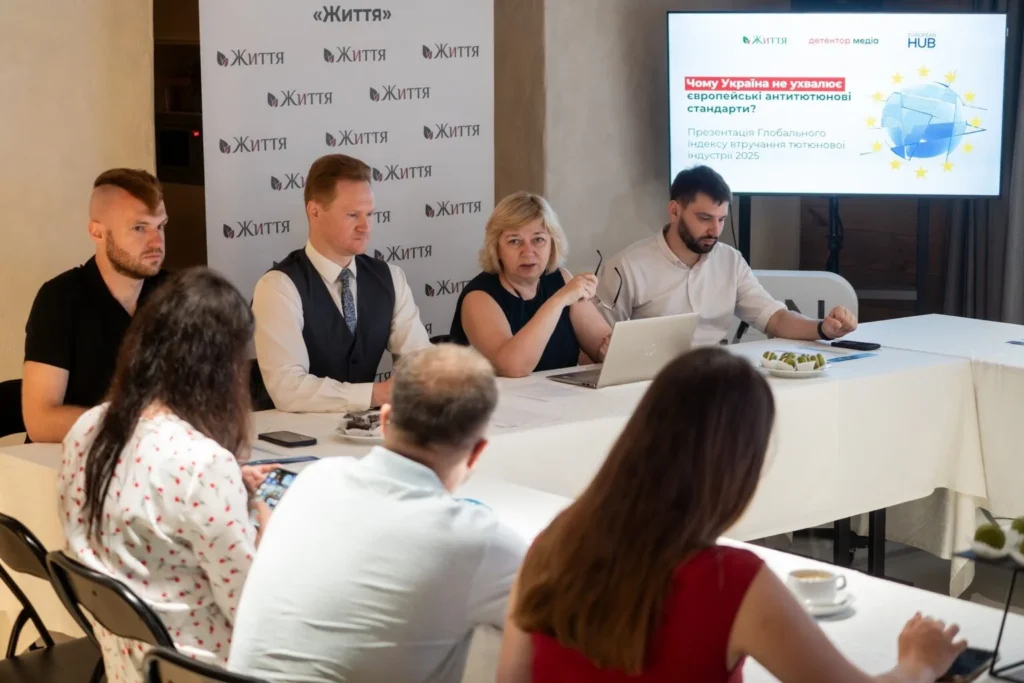
170On June 30, 2026, the Advocacy Center “Life”, in partnership with the NGO “Detector Media” and the European Hub, held a press breakfast titled “Why Ukraine Is Not Adopting European Anti-Tobacco Standards.” During the event, expert stakeholders and media representatives discussed the results of the 2025 Global Tobacco Industry Interference Index, how the tobacco industry is blocking the fulfillment of Ukraine’s European integration commitments on tobacco and nicotine control, and what decisions are needed.
In the 2025 Global Tobacco Industry Interference Index, the lowest levels of tobacco industry interference were recorded in Brunei (14 points), Palau (30 points), Botswana (33 points), and Finland and the Netherlands (34 points each), while the Dominican Republic and Switzerland ranked last with 98 and 96 points respectively out of a possible 100 (where 0 represents the lowest level of interference and 100 the highest).
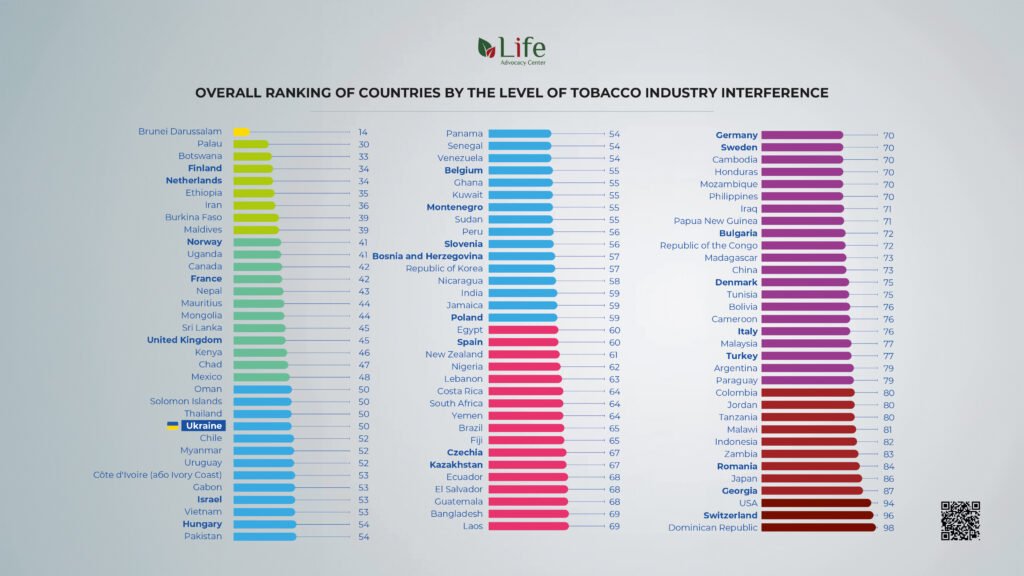
Ukraine scored 50 points, six points more than in 2023 (44 points). This increase demonstrates growing tobacco industry interference in the formation of state policy on tobacco and nicotine control in Ukraine.
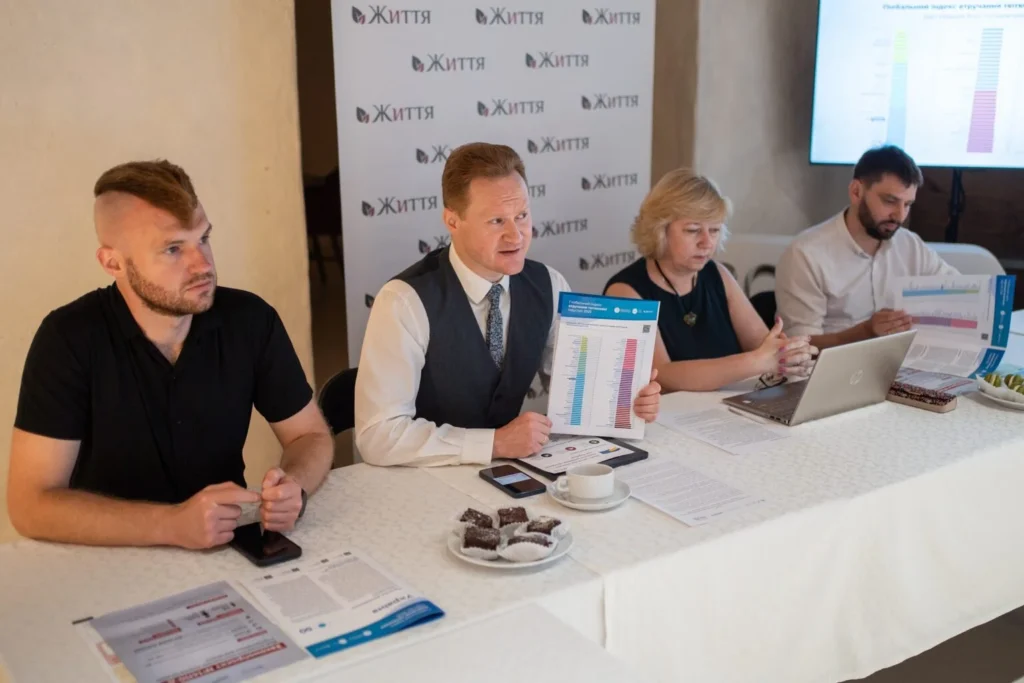
“Ukraine has taken on clear international obligations to protect health policy from tobacco industry influence. Implementation of Article 5.3 of the WHO Framework Convention on Tobacco Control is a necessary condition for ensuring that decisions protecting children’s health from being drawn into the epidemic of tobacco and nicotine addiction are based on evidence rather than commercial interests. The stronger the industry’s influence on decision-making, the more healthy, working-age people Ukraine loses, and the slower its progress toward European integration,” emphasized Dmytro Kupyra, Program Director of the Advocacy Center “Life.”
Among the main challenges identified in the report is the tobacco industry’s involvement in drafting and promoting legislation, which resulted in the introduction of a 25% excise tax preference for heated tobacco products (HTPs) compared to cigarettes. The government acknowledged that a compromise on excise tax rates had been reached with industry representatives.

“Tobacco industry interference in shaping state policy carries significant corruption risks, as it is aimed at advancing commercial interests at the expense of public health goals. Ukraine has already taken an important step by establishing a Transparency Register, but the influence of tobacco companies extends far beyond officially declared activities. That is why Ukraine needs to strengthen mechanisms protecting state policy from tobacco industry interference in line with Article 5.3 of the WHO Framework Convention on Tobacco Control,” stressed Serhii Mytkalyk, Chairman of the Board of the NGO “Anti-Corruption Headquarters.”
As of 2026, the tobacco industry continues to interfere in the formation of health protection policy in Ukraine, hindering the adoption of important decisions meant to protect the population from the harms of tobacco and nicotine. In particular, since 2024, the European integration bill No. 12091, which among other things provides for a ban on flavored tobacco products, has been blocked in the Verkhovna Rada of Ukraine. At the same time, for more than ten years Ukraine has not ratified the WHO Protocol to Eliminate Illicit Trade in Tobacco Products — an international treaty aimed at establishing a comprehensive system for controlling the circulation of tobacco products. These regulatory initiatives are part of the National Program for the Adaptation of Ukrainian Legislation to EU Law (the EU acquis), approved by the Cabinet of Ministers of Ukraine.
At the end of 2025, the Verkhovna Rada Committee on the Nation’s Health, together with the expert community and the public, developed draft law No. 14110-d, aimed at regulating the circulation of nicotine pouches (snus). Currently these products are effectively outside proper regulation, available to minors, and may contain nicotine doses tens of times higher than in a single cigarette. The lack of regulation creates serious risks to the health of children and young people and requires an urgent government response.

“As journalists, we observe systemic interference by the tobacco industry both in state policy-making processes and in the information space. Recent decisions by the National Council on Television and Radio Broadcasting regarding warnings issued to media for illegal advertising of nicotine pouches only confirm the scale of the problem. Moreover, the media show a systemic pattern of promoting weak regulation of nicotine pouches, which bears signs of informational pressure on the decision-making process, particularly in parliament,” noted Svitlana Ostapa, Deputy Editor-in-Chief of “Detector Media.”
Article 4 of Ukrainian Law No. 2899-IV establishes the priority of health protection policy over the financial, tax, and corporate interests of persons connected to the tobacco industry. Equally important is ensuring the implementation of Article 5.3 of the WHO Framework Convention on Tobacco Control, which Ukraine has ratified, thereby committing to protect public health policy from the commercial and corporate influence of the tobacco industry.
To effectively counter tobacco industry interference in state policy aimed at protecting the population from the harm of tobacco and nicotine, the Global Tobacco Industry Interference Index recommends, among other things:
- Implementing a nationwide policy to limit the participation of the tobacco industry (TI) in policy development in accordance with Article 5.3 of the WHO FCTC.
- Ensuring transparency of all interactions between government officials and the TI through mandatory public disclosure of information about meetings, contributions, gifts, or support from tobacco-industry-linked entities.
- Strengthening conflict-of-interest prevention across all sectors of public administration.
- Creating and implementing a national awareness program on Article 5.3 of the WHO FCTC.
- Supporting independent mechanisms for monitoring TI interference and deepening cooperation with civil society to strengthen public oversight.
Implementing these measures will strengthen state health protection policy in Ukraine and ensure effective protection of the population from the harm caused by tobacco and nicotine products, which leads to the premature deaths of 100,000 Ukrainians every year.
2025 Global Tobacco Industry Interference Index
2025 Global Tobacco Industry Interference Index – Ukraine (full report)
2025 Global Tobacco Industry Interference Index – Ukraine (summary)
Background information:
The Global Tobacco Industry Interference Index is an international study that assesses the effectiveness of governments in countering tobacco industry interference and protecting public health policy from the commercial and corporate interests of the tobacco industry, in accordance with Article 5.3 of the WHO Framework Convention on Tobacco Control, which Ukraine has also ratified and incorporated into national legislation.
The 2025 Global Tobacco Industry Interference Index, the fifth in its series, was developed by the Global Center for Good Governance in Tobacco Control (GGTC) with support from the STOP network. Since its first edition in 2019, the number of countries covered has grown from 33 to 100.
The Index is based on publicly available information on tobacco industry interference in various countries and their governments’ responses to it.
Contact person: Olha Masna, Media Coordinator, NGO “Life,” 073 089 65 70, olha.masna@center-life.org